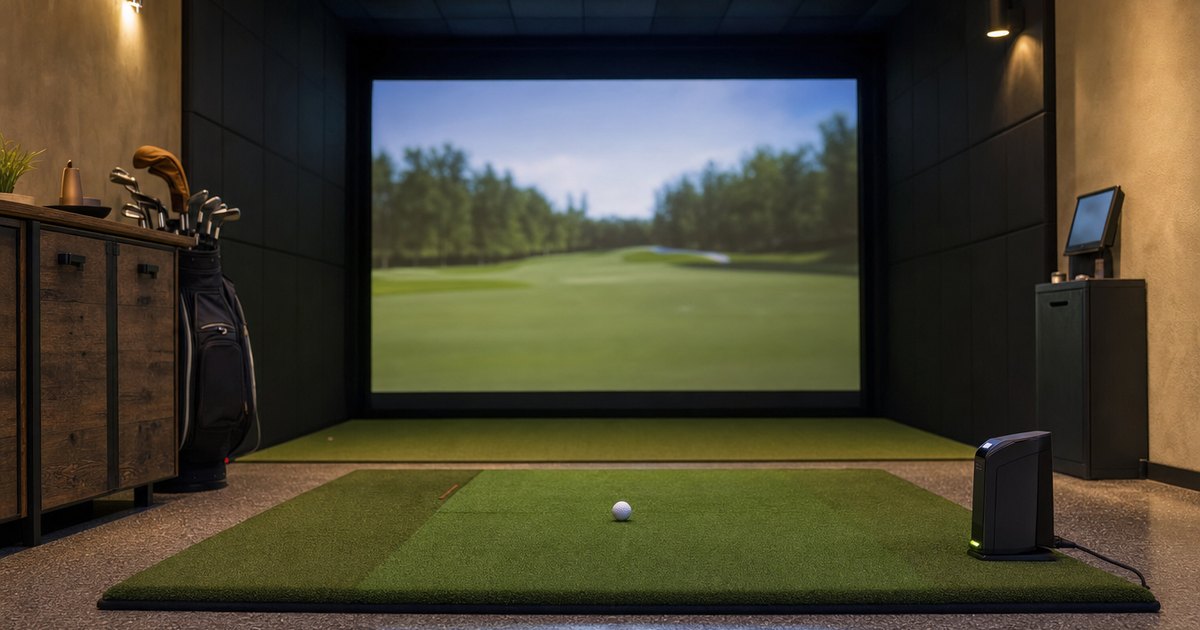
A launch monitor will make you better or it will make you crazy, and the difference is entirely in how you use it. I’ve done both. There was a stretch where I stood over every shot already thinking about the spin number, and my golf fell apart because I was playing to the screen instead of to the ball. Here’s the routine I worked out to use the data without drowning in it.
The core rule: data between shots, not during
The single biggest fix was deciding when I’m allowed to look at numbers. I practise in two modes and I never blend them:
- Hitting mode: I look at the target and the ball. Not the screen. I make an athletic swing and react to the shot like I would on the course. No peeking at numbers mid-set.
- Reading mode: Between sets, I look at the data — as a pattern, not a single shot — and decide what, if anything, to adjust.
The moment data leaks into hitting mode, I start steering the club to please the screen, and that’s the paralysis. Keeping the two separate fixed most of it on its own.
I read patterns, never single shots
One shot tells you almost nothing. Spin scatters, strike varies, and a single hero or disaster will send you chasing ghosts. So in reading mode I look at a cluster — five to ten similar swings — and read the center of it. Is the carry consistent? Is the strike clustered or sprayed? Is the spin in a sensible band or all over? The pattern is the truth; the individual number is noise.
This also keeps me honest about which numbers I even trust. Measured numbers I’ll act on; calculated ones I only watch for trends. (If you’re not sure which of your numbers are which, that distinction is the whole reason I sort units the way I do in the best launch monitors for spin guide.)
One focus per session
I pick one thing per session and ignore the rest of the wall of numbers. Tonight it’s strike quality. Tomorrow it might be start direction, or wedge carry consistency. Trying to fix everything at once is how you fix nothing and leave the garage frustrated. One number, one focus, and I let the other forty readings scroll by unread.
A simple structure that keeps it fun
My typical winter session looks like this:
- Warm up off the screen entirely — a dozen easy wedges, no numbers, just feeling the strike. Hitting mode only.
- Skill block on tonight’s one focus — sets of shots in hitting mode, then a glance at the pattern in reading mode between sets. Small adjustments, then back to hitting.
- Play, don’t practise — I finish by playing a few holes on the sim. Targets, consequences, a club in hand, no analysis. This is the part the enclosure exists for, and it’s what keeps me coming back on a cold night.
That last block matters more than people think. If every session is pure analysis, the garage becomes a chore and you quit. Ending on play keeps the hobby a hobby.
The signs you’ve tipped into paralysis
It’s easy to slide into number-obsession without noticing, so here are the tells I watch for in myself. If I catch any of these, I know I’ve let the data take over and it’s time to reset to the routine above:
- I’m checking the screen mid-swing or right at the top of the backswing. The instant I’m thinking about the number while the club’s moving, I’m steering, not swinging.
- One bad reading has ruined my mood. If a single shot’s spin or carry number can sour a whole session, I’ve forgotten that one shot is noise.
- I’ve stopped finishing my shots. Decelerating or quitting on the ball to “hit the number” is a dead giveaway I’m playing to the screen.
- I haven’t actually played a hole in weeks. All analysis, no golf, means the screen has become a spreadsheet instead of a course.
The fix for all of them is the same: drop the numbers, hit a dozen easy ones looking only at the ball, and end the session by playing a hole for fun. Reset, don’t grind.
Why measured data makes this easier
There’s a quiet link between the measured-versus-calculated stuff I bang on about and staying sane in practice. When you trust your numbers, you can act on them once and move on. When you don’t trust them — when half your readings might be a model’s guess — you end up second-guessing every shot, re-hitting to “confirm,” and never settling. That endless re-checking is its own kind of paralysis, and it comes straight from not knowing which numbers to believe.
So owning a unit that measures the things you care about isn’t just about accuracy for its own sake. It’s about being able to glance at a pattern, believe it, make one change, and get back to hitting — instead of drowning in readings you’re not sure are real.
Numbers serve the golf, not the other way around
The mindset that saved my practice is that the data is there to answer a question I already had — “is my strike improving?”, “is my start direction tightening?” — not to generate anxiety I didn’t walk in with. I bring a question, I read the pattern, I make one adjustment, I go back to hitting. That’s it.
The whole reason I obsess over measured-versus-calculated data isn’t so you can stare at more numbers. It’s so the few numbers you do act on are ones worth acting on — and so the screen makes you better instead of making you flinch. Use the data between shots, read patterns, pick one focus, and finish by playing. That routine turned my launch monitor from a source of paralysis into the reason my winters actually improve my golf.