Best Launch Monitors for Measured Spin
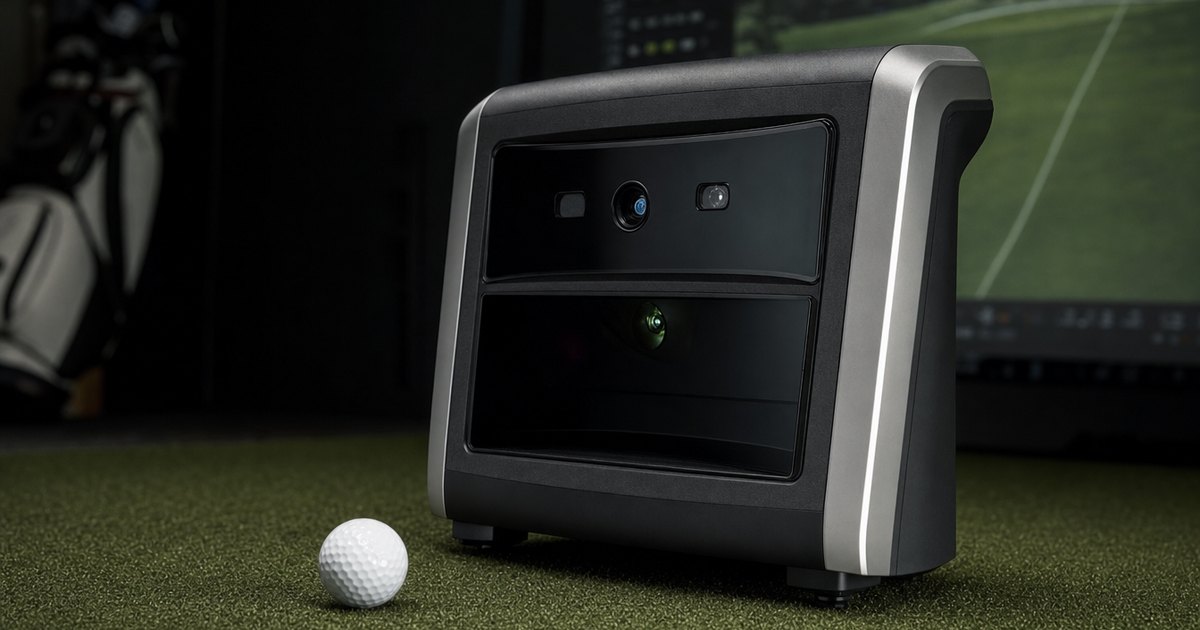
The best launch monitor for spin is the one that genuinely measures it — not the one that calculates a spin number from ball speed and presents it as fact. This guide explains the specs that decide the buy — tech type (Doppler radar or photometric camera), which parameters are measured versus calculated, the published accuracy band, indoor or outdoor use, and sim-platform compatibility — then matches them to five categories: best overall for measured spin, best photometric (camera) for spin, best Doppler radar for spin, best prosumer measured-data unit and best value that truly measures spin. Verified picks appear in each slot once real product data is in.
A note on how to read this. There is no single best spin unit for everyone — the right one depends on whether you hit indoors or outdoors, how much accuracy you need, and which sim platform you run. So the value here is the framework: what each spec changes, so you can shortlist a unit that measures spin the way your game needs. Read the framework first, then look at the picks. The one thing worth saying up front, from the winter that started this whole site: my first monitor calculated spin from ball speed, I trusted it, and I rebuilt my swing around a number that turned out to be nothing like my real spin. Spin is the parameter golfers most often change their swing around, which is exactly why it is the parameter most worth measuring rather than estimating.
Specs, accuracy bands and sim-software compatibility verified against manufacturer details and current retail listings — no hands-on accuracy-testing claims. "Measured vs calculated" labels reflect each manufacturer's published data method (Doppler radar / photometric camera / derived). Always confirm current sim-platform compatibility and indoor-space requirements on the manufacturer's site before buying.
How to choose a launch monitor for spin
A handful of specs decide whether a unit measures spin in a way you can trust — and the first one is whether it measures spin at all.
Measured vs calculated spin — the spec that defines this page
This is the line everything else hangs on. Spec-by-spec, a unit that measures spin reads the ball's actual rotation directly — typically a photometric camera capturing the dimples at impact, or a radar unit with the resolution to track spin itself. A unit that calculates spin derives it from ball speed and launch through a model. The calculated number can look precise on screen and still be wrong, because it inherits any error in the inputs and the model's assumptions — and you cannot see that drift happening. If you are going to change your swing around what the screen says, change it around a number the unit actually measured. That is the entire reason this page separates units that measure spin from those that estimate it; the data depth hub walks the full measured-versus-calculated breakdown parameter by parameter.
Tech type — photometric camera vs Doppler radar for spin
The two technologies measure spin in different ways, and which suits you depends on where you hit. Spec-by-spec, a photometric unit photographs the ball and club at impact and reads spin directly off the markings and dimples — it needs very little hitting distance, which is why camera units tend to be the strong indoor choice for measured spin. A Doppler radar unit tracks the ball in flight; the higher-resolution radar units measure spin directly, while cheaper ones calculate it. So the technology alone does not settle it — you check whether the specific unit measures spin, and where it can do so accurately. Outdoors with room to fly, radar shines; in a tight room, photometric usually wins.
Accuracy band — read what the manufacturer actually publishes
A spin spec means little without the accuracy band that comes with it. Spec-by-spec, manufacturers publish accuracy figures for the parameters their unit measures — and the honest ones are clear about which numbers are measured and which are derived. The figure to look for is the published spin accuracy for measured spin, not a blanket claim that the unit "gives you spin". We aggregate these published bands rather than testing them ourselves; the point is to compare like with like, so a unit that measures spin to a stated band is judged against another that does the same, not against one that merely calculates it.
Indoor vs outdoor and sim compatibility
Measured spin you cannot capture in your space is no use, so where you hit is a real spec. A photometric unit reads spin at impact and needs little room, which suits a garage; a radar unit that measures spin needs depth or a metric-ball mode to do it indoors. Spec-by-spec, check the stated minimum hitting space against your actual room before the spin claim. The same units that measure spin tend to feed the richest data to a simulator, so if a sim is the goal, confirm the unit is on your platform's supported-hardware list — GSPro, E6 Connect or The Golf Club. A budget radar build and the rest of the room are covered on the best budget golf simulator guide.
The spin monitors compared
A short list of widely available units that measure or derive spin, compared on the specs above. Specs and accuracy bands are verified against manufacturer details and current retail listings — no hands-on accuracy-testing claims, and "measured vs calculated" reflects each manufacturer's published data method.
| Best for | Tech type (radar/photometric) | Data params measured | Measures spin? | Indoor / outdoor | Sim compatibility |
|---|---|---|---|---|---|
| Best overall for measured spin | Photometric (3 cameras) | Full ball & club data incl. measured spin | Yes (measured) | Indoor & outdoor | Garmin Golf, GSPro, E6 Connect |
| Best photometric (camera) for spin | Photometric (camera) | Full ball & club data incl. measured spin | Yes (measured) | Indoor (camera-based) | GSPro, E6 Connect, FSX (with plans) |
| Best Doppler radar for spin | Radar (Doppler) | Swing speed, ball speed, distance, smash factor | No (radar estimates ball flight, not spin) | Indoor & outdoor | Standalone (voice output) |
| Best value that truly measures spin | Photometric (camera) | 13 metrics (ball/club speed, launch, spin, carry) | Yes | Indoor & outdoor | Swinora app (3D driving range) |
Our top picks
Best overall for measured spin: Garmin Approach R50, Premium Golf Launch Monitor and Simulator with Three Built-in Cameras and Touchscreen

Best overall for measured spin
Garmin Approach R50, Premium Golf Launch Monitor and Simulator with Three Built-in Cameras and Touchscreen
Garmin
- Tech type (radar/photometric): Photometric (3 cameras)
- Data params measured: Full ball & club data incl. measured spin
- Measures spin?: Yes (measured)
- Indoor / outdoor: Indoor & outdoor
- Sim compatibility: Garmin Golf, GSPro, E6 Connect
- Price-tier: Premium
The Garmin Approach R50 uses three built-in cameras to measure full ball and club data, including true spin, with a large touchscreen and simulator software. It is the best overall pick for golfers who want directly measured spin and broad sim compatibility.
Last checked 2026-06-15
Best photometric (camera) for spin: Bushnell Golf Launch Pro Photometric Launch Monitor and Simulator

Best photometric (camera) for spin
Bushnell Golf Launch Pro Photometric Launch Monitor and Simulator
Bushnell
- Tech type (radar/photometric): Photometric (camera)
- Data params measured: Full ball & club data incl. measured spin
- Measures spin?: Yes (measured)
- Indoor / outdoor: Indoor (camera-based)
- Sim compatibility: GSPro, E6 Connect, FSX (with plans)
- Price-tier: Prosumer / premium
The Bushnell Launch Pro is a camera-based monitor that directly measures spin and full club/ball data with pro-grade accuracy. It is the best photometric pick for serious indoor sim users who want measured spin below flagship pricing.
Last checked 2026-06-15
Best Doppler radar for spin: Voice Caddie SC200Plus Portable Golf Launch Monitor with Swing & Ball Speed, Distance and Smash Factor

Best Doppler radar for spin
Voice Caddie SC200Plus Portable Golf Launch Monitor with Swing & Ball Speed, Distance and Smash Factor
Voice Caddie
- Tech type (radar/photometric): Radar (Doppler)
- Data params measured: Swing speed, ball speed, distance, smash factor
- Measures spin?: No (radar estimates ball flight, not spin)
- Indoor / outdoor: Indoor & outdoor
- Sim compatibility: Standalone (voice output)
- Price-tier: Budget
The Voice Caddie SC200Plus is an affordable Doppler-radar monitor for speed, distance, and smash factor. It is the best budget radar option here, though radar units of this class estimate ball flight and do not directly measure spin.
Last checked 2026-06-15
Best value that truly measures spin: Swinora Golf Launch Monitor & Simulator: Portable Swing Analyzer with 13 Metrics, 3D Driving Range, 3D Trajectory & Video Record for iOS/Android

Best value that truly measures spin
Swinora Golf Launch Monitor & Simulator: Portable Swing Analyzer with 13 Metrics, 3D Driving Range, 3D Trajectory & Video Record for iOS/Android
Swinora
- Tech type (radar/photometric): Photometric (camera)
- Data params measured: 13 metrics (ball/club speed, launch, spin, carry)
- Measures spin?: Yes
- Indoor / outdoor: Indoor & outdoor
- Sim compatibility: Swinora app (3D driving range)
- Price-tier: Budget
The Swinora is a camera-based monitor that reports spin among its 13 metrics at the lowest price in this spin-focused lineup. It is the best value pick for golfers who want spin data without stepping up to premium photometric units.
Last checked 2026-06-15
Who should buy what
The golfer who wants the most trustworthy spin — best overall for measured spin
The best overall for measured spin slot is for the golfer who wants spin read directly and accurately, in a unit that also covers club and ball data well. Spec-by-spec, this is the unit whose published data method measures spin rather than deriving it, with an accuracy band you can plan a swing change around. It is the best-rounded answer for someone who treats spin as the number they actually fix faults with.
The trade-off is cost — genuinely measured spin sits above the budget tier, and the most accurate units sit higher still. For a golfer building or fixing a swing around spin, that is the right place to spend, because this is the one parameter where a guessed number does the most damage. If your budget is tighter, the value slot below measures spin for less.
The indoor and garage-sim golfer — best photometric (camera) for spin
The best photometric (camera) for spin slot suits the golfer hitting indoors with limited room. Spec-by-spec, a photometric unit reads spin off the ball at impact and needs very little hitting distance, which is exactly what a garage or short indoor bay asks for. For measured spin in a tight space, the camera approach is the natural fit — it captures the rotation directly rather than waiting for ball flight that the room cannot provide.
The trade-off is that photometric units want consistent lighting and careful placement, and the best ones are not cheap. For an indoor-first golfer chasing real spin data, that is a fair price — a radar unit that measures spin would need room you do not have. Pair it with a simulator enclosure, mat and net and you have a measured-spin bay in the space you actually own.
The range and outdoor golfer — best Doppler radar for spin
The best Doppler radar for spin slot is for the golfer with room to fly the ball who wants measured spin outdoors. Spec-by-spec, a higher-resolution radar unit can track spin directly in flight, giving you measured spin alongside strong ball-flight data in the conditions radar was designed for. For range work with space behind and in front of the ball, that is the efficient way to measure spin without a camera's lighting and placement demands.
The trade-off is space: a radar unit that measures spin needs depth, so it is the wrong pick for a short indoor room where a photometric unit would shine. If the range is your home, that is no loss — you are using radar where it is strongest. If a tight garage is the reality, look back at the photometric slot instead.
The serious improver building a permanent setup — best prosumer measured-data unit
The best prosumer measured-data unit slot is for the golfer building a permanent, data-rich setup where measured spin is one of many measured parameters. Spec-by-spec, this is the unit that measures the full club-and-ball picture — spin, club path, face data and the rest — with the tightest published accuracy bands on the page. It is the choice for someone whose practice is built entirely on trusting the numbers.
The trade-off is price and, often, a more demanding install — careful placement, space and a real commitment to the setup. For a serious improver that is the point: this is the slot you buy when you want every measured number to be one you can build around, not just spin. For most golfers, the overall or value slot already covers the spin they care about.
The golfer on a budget who still wants real spin — best value that truly measures spin
The best value that truly measures spin slot is for the golfer who refuses to build a swing change on a calculated number but cannot stretch to the top units. Spec-by-spec, this is the most affordable unit on the page whose published data method measures spin rather than deriving it — you give up some accuracy and data depth, but the spin figure is read, not guessed. That is the whole point: the cheapest measured spin still beats an expensive calculated one for the thing you change your swing around.
The trade-off is a wider accuracy band and fewer measured extras than the prosumer slot. For a value-minded golfer who has learned not to trust calculated spin, that is the right compromise — and a far better starting point than the sub-$1,000 units that calculate spin from ball speed.
What to buy alongside the monitor
A monitor is the start of a natural cart-stack. Heading indoors, add a simulator enclosure, mat and net to turn the corner into a measured-spin bay, and look at a budget golf simulator build to run sim software through the off-season. Want a cheaper entry first? See launch monitors under $1,000, run the measured-vs-calculated comparator to confirm which figures a unit reads directly, and check your room with the space & ceiling-height planner before you buy a screen or projector.
Frequently asked questions
What does it mean for a launch monitor to "measure" spin?
A unit that measures spin reads it directly — typically a photometric camera tracking the ball, or radar with the resolution to capture spin itself. A unit that calculates spin derives it from ball speed and launch data. The calculated number can look precise and still be wrong, which is why this page separates units that truly measure spin from those that estimate it.
Doppler radar or photometric camera — which measures spin better?
Both can, depending on the unit. Spec-by-spec, a photometric (camera) system reads spin off the ball directly by photographing its dimples at impact, which is why camera units tend to measure spin well and work in a tight indoor space. A Doppler radar system tracks the ball in flight; the higher-end radar units have the resolution to measure spin directly, while cheaper ones calculate it from ball speed and launch. So the technology is not the whole answer — what matters is whether the specific unit measures spin or derives it, and where it can do that accurately. Verified picks land on this page once real product data is in.
Why is measured spin worth paying more for?
Because spin is the parameter golfers most often change their swing around, so an error here costs the most. Spec-by-spec, a calculated spin figure is a model's estimate from the data the unit did measure; if your strike, the unit's placement or the model's assumptions are slightly off, the spin number drifts with them and you cannot see it happen. A measured spin number is read directly from the ball, so it does not inherit those errors. If you are going to chase a spin problem, paying for a number that was measured rather than guessed is the difference between fixing a real fault and inventing one.
Does a launch monitor that measures spin work indoors?
Photometric units are usually the better indoor choice for measured spin because they read the ball at impact and need very little hitting distance. Radar units that measure spin need room for the ball to fly, so indoors they want depth or a metric-ball mode. Spec-by-spec, the figure to check is the unit's stated minimum hitting space against the room you actually have — measured spin you cannot capture in your garage is no use, so confirm the indoor rating before the spin claim.
Will a spin-measuring monitor run my golf simulator?
Usually yes, and these units often output the richest data for a sim to render. Spec-by-spec, sim capability depends on whether the unit is on the platform's supported-hardware list — GSPro, E6 Connect, The Golf Club — and outputs the parameters the sim needs. Measured spin in particular makes simulated ball flight more realistic. Compatibility is set by the manufacturer and changes over time, so confirm your exact platform before buying.
Do I really need measured spin, or is calculated good enough?
It depends on what you are doing with the number. For dialling in carry distances and gapping, the measured ball-speed and launch data from a budget unit is often enough, and a calculated spin figure is a fine guide. The moment spin becomes the thing you are trying to fix — too much wedge spin, a knuckling driver, a fade you cannot explain — calculated is no longer good enough, because you would be changing your swing around an estimate. That is the line this page is built on.