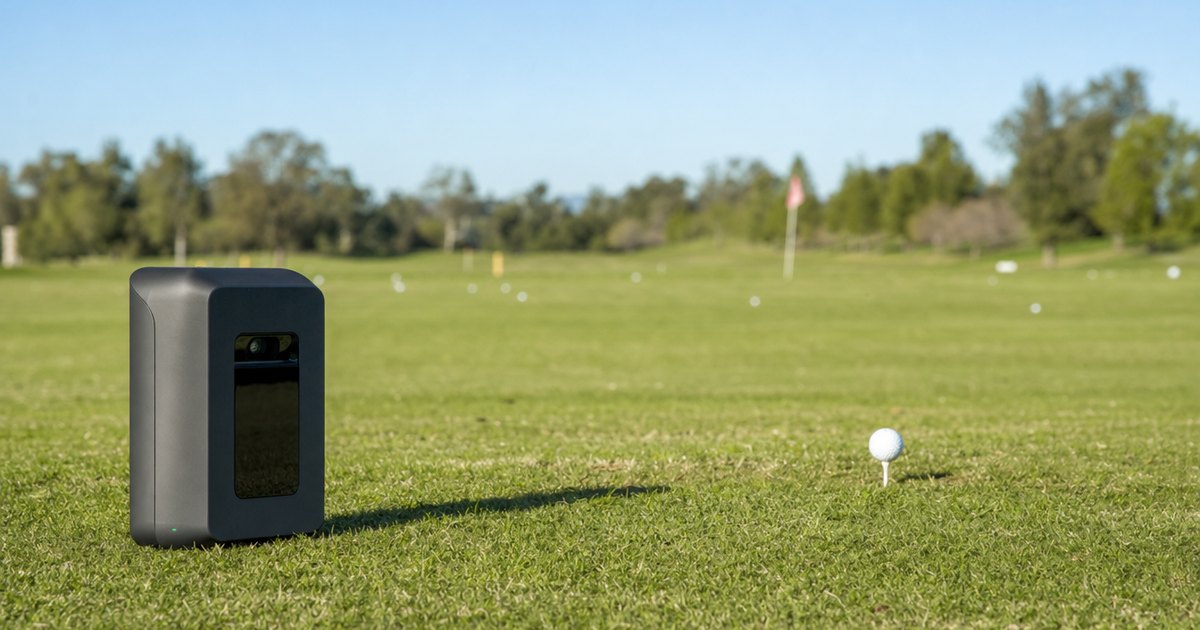
The radar-versus-camera debate gets argued like it’s about which technology is “better.” It isn’t. They’re good at different things, and — this is the part people miss — the same unit can feel completely different depending on whether you’re hitting outdoors or jammed into a garage. Here’s how I think about it after years of doing both.
Before I get into it, one honest caveat: I’ve hit on both kinds over the years in my own garage and out at the range, but I haven’t run lab accuracy tests on specific units, and I’m not going to pretend I have. What follows is how these two technologies behave in real spaces — the strengths and headaches I’ve lived with and seen a hundred times in the forums — not a bench comparison of any particular model.
How each one sees the ball
Doppler radar units track the ball (and sometimes the club) by bouncing radio waves off it and reading the frequency shift as it flies. They essentially watch the flight — they need the ball to travel some distance so they can track it through the air.
Photometric units use high-speed cameras to take rapid images of the ball (and a marked or pictured ball helps) right at impact and just after. They read launch and spin from the ball’s appearance and rotation in those frames — they care about the moment of launch, not the whole flight.
That single difference — flight versus moment — explains almost everything about where each one shines.
Outdoors: advantage radar
On a real range with the ball flying out into open space, radar is in its element. It’s watching the ball do its full thing with room to track. You set it behind you, hit out into the world, and it reads the flight it was designed to read. Radar’s portability and “just put it on the grass and swing” simplicity is genuinely great outdoors.
Cameras work outdoors too, but they don’t need the open space, so you’re not buying their main advantage. And bright, variable outdoor light can sometimes complicate a camera’s job.
Indoors: advantage photometric
Now put both in a garage where the ball travels a few feet into a net or screen before it stops. This is where radar struggles: you’ve taken away the flight it wants to track. Radar units can still work indoors, but they often need as much distance to the screen as you can give them, and you’re asking them to extrapolate a full flight from a short look. Less ideal data, more sensitivity to placement.
Photometric units don’t care that the ball stops three feet later — they already got what they needed at impact. That’s why cameras tend to feel more at home in a tight indoor bay, and why so many dedicated sim builds lean photometric.
The honest middle
Two complications keep this from being a clean rule:
First, plenty of radar units have gotten genuinely good indoors and ship with guidance on placement and distance to make it work. “Radar can’t do indoors” is outdated. It’s more that radar prefers room and cameras don’t need it.
Second, the measured-versus-calculated question rides along on top of this. Some radar units measure ball speed beautifully and calculate spin; some cameras measure spin directly. So the technology choice and the data-honesty question are related but not the same — always check what each specific unit actually measures, by either method.
Where each one trips people up
Both technologies have failure modes that show up in the forums constantly, and they’re worth knowing before you buy into one camp.
Radar indoors, placed wrong. The most common radar complaint indoors is “my numbers are all over the place,” and nine times out of ten it’s placement. Radar wants the maximum distance you can give it between the unit, the ball, and the screen, set exactly where the manufacturer specifies. Crammed too close to a net three feet away, it’s being asked to read a flight that barely exists. Give it room and follow the setup guide and a lot of “radar can’t do indoors” complaints disappear.
Photometric with the wrong ball or light. Cameras read the ball, so they care what the ball looks like. Scuffed range rocks with no markings, or a ball oriented the wrong way, can degrade a camera’s spin read badly. Bright, shifting outdoor light can also confuse some camera units. Feed a photometric unit the ball it wants, lit the way it wants, and it’s happy; ignore that and you’ll blame the unit for a ball problem.
Confusing the technology with the data depth. People assume “radar = cheap, calculated” and “camera = expensive, measured.” It’s not that clean. There are radar units that measure beautifully and camera units that cut corners. The technology tells you about space and light fit; the spec sheet tells you what’s actually measured versus calculated. Read both.
How I’d choose
I boil it down to where I’ll mostly hit:
- Mostly outdoors / at the range, want to grab and go: radar’s simplicity and flight tracking is a natural fit.
- Mostly indoors in a tight bay: photometric’s “it only needs the moment of impact” behaviour suits the space.
- Both: be honest about which you’ll do most, and prioritise that, because the compromise unit that’s mediocre at both is the one that ends up in a closet.
If you’re shopping the affordable end where this choice matters most — because that’s where the trade-offs are sharpest — I broke down which technologies land in which units in the best golf launch monitors under $1,000 guide. Match the technology to your space and your light, not to whichever camp argues loudest online.