Best Golf Simulator Enclosures
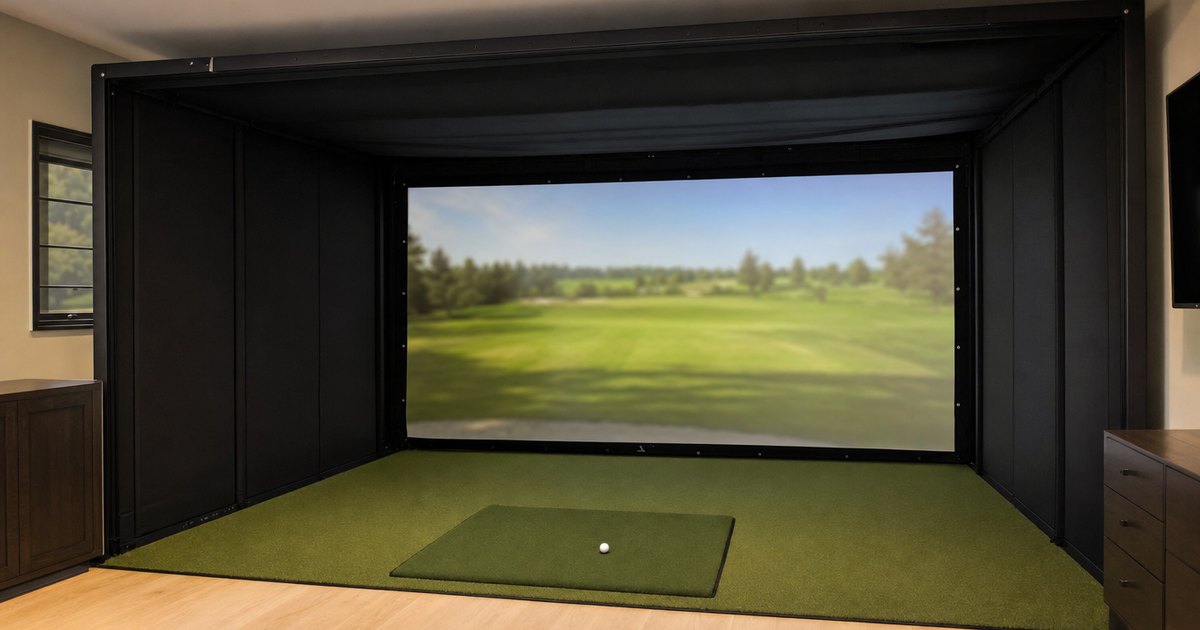
The best golf simulator enclosure is the one that fits your room and pairs cleanly with your monitor and screen — not the biggest one you can find. This guide explains the specs that decide the buy — type, size, material, compatibility and weight — across the whole bay, then matches them to five categories: best overall enclosure, best budget hitting net, best impact screen, best hitting mat and best all-in-one sim package. It is the natural cart-stack behind every launch-monitor or simulator purchase. Verified picks appear in each slot once real product data is in.
A note on how to read this. There is no single best enclosure for everyone — the right bay depends on your room, your monitor type and whether you want a projected screen or just a net. The enclosure and screen are the parts most constrained by your physical space, so the value here is the framework: what each spec changes, so you can shortlist a bay that fits the room you actually have. Measure first, read the framework, then look at the picks. The one thing worth saying up front, from my own garage build: an enclosure you cannot swing under is wasted money, and ceiling height catches more people than any spec on the box.
Specs and compatibility verified against manufacturer details and current retail listings — no hands-on testing claims. Type, size, material, compatibility and weight are drawn from published manufacturer specs. Always confirm indoor-space requirements before buying.
How to choose a golf simulator enclosure
A handful of specs decide whether a bay will work in your room — and the first is the one people regret skipping.
Size and your space — the spec that comes before everything
Before type, material or anything else, the bay has to fit. Spec-by-spec, an enclosure's published width, depth and height are checked against your measured room with clearance to swing — not the other way around. Width has to allow a full swing without catching the frame, and ceiling height has to clear a driver, which for most golfers means roughly 9 to 10 feet. An enclosure you cannot swing under is the most expensive mistake on this page, so measure your room length, width and ceiling height and run them through the sim space planner before you choose a size.
Type — net, enclosure or all-in-one
The bay comes in a few forms, and the right one depends on whether you want a projected image. Spec-by-spec, a hitting net simply stops the ball and is the cheapest, most compact start; an enclosure frames an impact screen for a projected round and a contained, finished bay; an all-in-one package bundles the enclosure, screen and mat into one matched kit. There is no single best type — a net suits a data-first practice setup, an enclosure suits a play-the-course build, and a package suits a first-timer who wants it to arrive sized to work together. The enclosures hub lays out the full build kit if you want the wider view.
Material and weight — durability and how it mounts
Material decides how long the bay lasts and how well it works. Spec-by-spec, an impact screen's material and weave set both its durability under repeated full-speed strikes and the sharpness of the projected image; a mat's turf material and thickness set how kind it is to your joints and how long it survives. Weight is the spec that tells you how it mounts and how solid it feels — a heavier enclosure frame and a tightly tensioned screen hold up better than light, slack ones. These are manufacturer-published figures aggregated here, not our own wear tests, so compare like with like: a heavier, denser build generally outlasts a lighter one.
Compatibility — making the bay work with your monitor and projector
The bay has to suit the monitor and screen you are pairing it with. Spec-by-spec, a Doppler radar monitor sits behind or beside the ball and needs the enclosure deep enough to read, while a photometric unit sits near the ball and is less depth-dependent — so compatibility is really about whether the bay leaves room for your monitor type to work, plus enough distance for the projector throw. Confirm the depth your monitor needs against the enclosure dimensions before buying. Whether your monitor measures spin or a budget unit under $1,000, the enclosure's job is to give it the space it needs.
The enclosures and bay kit compared
A short list of widely available enclosures, screens, mats and nets, compared on the specs above. Specs and compatibility are verified against manufacturer details and current retail listings — no hands-on testing claims.
| Best for | Type | Size | Material | Compatibility | Weight |
|---|---|---|---|---|---|
| Best overall enclosure | Full enclosure (frame + impact screen) | Not listed | Steel frame, polyester impact screen | Projectors & most launch monitors | Not listed |
| Best budget hitting net | Hitting net | 10 x 7 ft | Polyester net, fiberglass/steel frame | Backyard / garage practice | Not listed |
| Best impact screen | Impact / projection screen | Not listed | Triple-layer polyester | Projector simulators | Not listed |
| Best hitting mat | Hitting mat | Not listed | Rubber base with synthetic turf | Irons & woods, indoor/outdoor | Not listed |
| Best all-in-one sim package | All-in-one net + impact screen | 11 x 8 ft | Heavy-duty net, polyester impact screen, target cloth | Indoor/outdoor projector simulators | Not listed |
Our top picks
Best overall enclosure: GYMMALL Golf Simulator Enclosure with Impact Screen and Steel Frame for Home Golf Simulator

Best overall enclosure
GYMMALL Golf Simulator Enclosure with Impact Screen and Steel Frame for Home Golf Simulator
GYMMALL
- Type: Full enclosure (frame + impact screen)
- Size: Not listed
- Material: Steel frame, polyester impact screen
- Compatibility: Projectors & most launch monitors
- Weight: Not listed
The GYMMALL enclosure combines a steel frame and a dedicated impact screen into a complete hitting bay. It suits golfers building a permanent home simulator who want a projector-ready screen and frame in one purchase.
Last checked 2026-06-15
Best budget hitting net: Mangostar Golf Net, 10x7ft Heavy Duty Golf Practice Net for Backyard Driving with Target and Carry Bag

Best budget hitting net
Mangostar Golf Net, 10x7ft Heavy Duty Golf Practice Net for Backyard Driving with Target and Carry Bag
Mangostar
- Type: Hitting net
- Size: 10 x 7 ft
- Material: Polyester net, fiberglass/steel frame
- Compatibility: Backyard / garage practice
- Weight: Not listed
The Mangostar 10x7ft net is a heavy-duty backyard hitting net with a target and carry bag at a budget price. It suits golfers who want a simple, portable net for full-swing practice without a screen or projector.
Last checked 2026-06-15
Best impact screen: Durbles Golf Simulator Impact Screen, Premium Triple Layer Projection Screen for Home Golf Simulator

Best impact screen
Durbles Golf Simulator Impact Screen, Premium Triple Layer Projection Screen for Home Golf Simulator
Durbles
- Type: Impact / projection screen
- Size: Not listed
- Material: Triple-layer polyester
- Compatibility: Projector simulators
- Weight: Not listed
The Durbles impact screen uses a triple-layer build to absorb ball impact while serving as a bright projection surface. It suits golfers adding a screen to an existing frame for a projector-based simulator.
Last checked 2026-06-15
Best hitting mat: FODESAN 3-in-1 Golf Hitting Mat with Rubber Tee Holder and Turf for Indoor Outdoor Practice

Best hitting mat
FODESAN 3-in-1 Golf Hitting Mat with Rubber Tee Holder and Turf for Indoor Outdoor Practice
FODESAN
- Type: Hitting mat
- Size: Not listed
- Material: Rubber base with synthetic turf
- Compatibility: Irons & woods, indoor/outdoor
- Weight: Not listed
The FODESAN 3-in-1 mat provides a durable turf hitting surface with a rubber tee holder for indoor or outdoor use. It suits sim builders who need an affordable, forgiving mat to hit from.
Last checked 2026-06-15
Best all-in-one sim package: LPALNTYS Golf Simulators for Home, 11x8FT Golf Net with Simulator Impact Screen and Target Cloth, Portable Heavy Duty Golf Hitting Net for Indoor Outdoor

Best all-in-one sim package
LPALNTYS Golf Simulators for Home, 11x8FT Golf Net with Simulator Impact Screen and Target Cloth, Portable Heavy Duty Golf Hitting Net for Indoor Outdoor
LPALNTYS
- Type: All-in-one net + impact screen
- Size: 11 x 8 ft
- Material: Heavy-duty net, polyester impact screen, target cloth
- Compatibility: Indoor/outdoor projector simulators
- Weight: Not listed
The LPALNTYS package bundles an 11x8ft hitting net, an impact screen, and a target cloth for a complete starter bay in one box. It suits golfers who want a single affordable purchase that covers net, screen, and target.
Last checked 2026-06-15
Who should buy what
The golfer building a proper projected bay — best overall enclosure
The best overall enclosure slot is for the golfer who wants a finished, projected bay that pairs cleanly with a monitor and screen. Spec-by-spec, this is the enclosure that balances size, material durability and compatibility — deep enough for a radar monitor, framed for a tensioned impact screen, and solid enough to last. It is the best-rounded choice for someone committing to a real course-play setup rather than just a net.
The trade-off is space and cost: a full enclosure asks for more room and more budget than a bare net. For a golfer building a permanent bay that is the point — but only if the room can take a full swing. Measure the ceiling first; the finest enclosure is useless in a room you cannot swing in.
The cheapest honest start — best budget hitting net
The best budget hitting net slot is about stopping the ball for the least money so you can practise today. Spec-by-spec, a good budget net catches full-speed strikes safely, sets up in a compact footprint, and pairs with a tablet view instead of a projected screen. For a golfer who wants to swing into a monitor without building a full bay, it is the efficient start.
What you give up is the projected image and the contained, finished look of an enclosure. For a data-first practice setup that is no loss — the net does its one job, and you can add a screen and enclosure later. It is the right first piece of the cart-stack for most builders on a budget.
The builder who wants the projected round — best impact screen
The best impact screen slot is for the golfer adding a sharp, durable projected image to their bay. Spec-by-spec, the screen is judged on material and weave (durability and image quality), size (matched to the enclosure and projector throw), and how it tensions and mounts — a heavier, tightly tensioned screen lasts longer and looks sharper. For the part of the build you stare at every session, those specs are what separate a crisp round from a rippling, short-lived one.
The trade-off is that a quality screen needs a proper enclosure or frame to tension it and a projector with the right throw. For a builder who wants the projected experience that is exactly the point — the screen is the payoff piece. Pair it with the enclosure above and confirm the projector distance your room allows.
The golfer protecting floor and joints — best hitting mat
The best hitting mat slot is for the golfer who wants to take thousands of strikes without wrecking the floor or their wrists. Spec-by-spec, the mat is judged on turf material and thickness (cushioning and durability), size (room for your stance and the monitor placement), and whether it accepts real tees. A thicker, denser mat is kinder to your joints and lasts longer — the part of the bay you stand on every single session.
The trade-off is that the best mats are heavier and cost more than a thin starter pad. For anyone practising regularly that is money well spent, because a cheap mat punishes your wrists and wears out fast. It is an easy piece to add to any net or enclosure build, and one most golfers upgrade sooner than they expect.
The first-timer who wants it simple — best all-in-one sim package
The best all-in-one sim package slot suits the golfer who wants the bay to arrive matched and ready rather than sourcing each piece. Spec-by-spec, a package bundles the enclosure, screen, mat and sometimes a net into one kit sized to work together, which removes the guesswork of confirming each part fits the next. For a first build, that convenience is a real advantage.
The trade-off is less freedom to tune or upgrade each part to your room and budget, and you still have to check the package fits your space and monitor depth. For a first-timer who values simplicity that is the right call; a builder optimising every piece will prefer separates. Either way, slot it into a budget golf simulator build and confirm the ceiling clears a full swing.
What this stacks onto
An enclosure is the back half of a build that starts with the monitor. Pair it with a launch monitor under $1,000 or a unit that measures spin, and slot it into a budget golf simulator build. Pick the monitor with the measured-vs-calculated comparator, then confirm the bay fits with the space & ceiling-height planner before you buy a screen or enclosure.
Frequently asked questions
What is the best golf simulator enclosure?
Verified picks land on this page once real product data is in. The short version: the right enclosure depends on your room size, your ceiling height and the launch monitor and screen you are pairing it with. Measure your space first, then match the enclosure type, size and material to it.
Do I need an enclosure, or just a net?
It depends on whether you want a projected image. Spec-by-spec, a net catches the ball and is the cheapest start; an enclosure adds an impact screen for a projected image and a more finished, contained bay. Many builders start with a net and a tablet view, then add a screen and enclosure later. The cart-stack order — monitor, mat, net or enclosure, screen, projector — is what this guide and the build pillar walk through, and you do not need every piece on day one.
What size golf simulator enclosure do I need?
The size that fits your room with clearance to swing — width and ceiling height matter most. Spec-by-spec, the enclosure has to leave room on each side and overhead for a full driver swing, so the published enclosure dimensions are checked against your measured room, not the other way around. Most golfers want roughly 9 to 10 feet of ceiling clearance and enough width to swing safely. Measure first and run the numbers through the space planner before you choose a size, because an enclosure you cannot swing under is wasted money.
What makes a good golf impact screen?
A good impact screen takes repeated full-speed strikes without tearing and shows a clear, bright projected image. Spec-by-spec, the things to compare are the material and weave (durability and image quality), the size (it has to match your enclosure and throw), and how it is tensioned and mounted (loose screens ripple and wear faster). A heavier, tightly tensioned screen lasts longer and looks sharper than a thin, slack one — these are the published specs to read, not our own durability testing.
What should I look for in a golf simulator mat?
A mat that protects your floor and your wrists while taking thousands of strikes. Spec-by-spec, compare the turf material and thickness (cushioning and durability), the size (room for your stance and the monitor placement), and whether it accepts real tees. A thicker, denser mat is kinder to your joints and lasts longer than a thin one, and a hitting strip that takes real tees matters if you practise driver. These are manufacturer-published specs aggregated here, not hands-on wear tests.
Will an enclosure work with my launch monitor?
Almost always, because the enclosure catches the ball regardless of the monitor — but placement is the catch. Spec-by-spec, a Doppler radar monitor sits behind or beside the ball and needs the enclosure to be deep enough for it to read, while a photometric unit sits near the ball and is less depth-dependent. So compatibility is really about whether the enclosure leaves room for your monitor type to work, plus enough screen distance for the projector. Confirm the depth your monitor needs against the enclosure dimensions before buying.
Is an all-in-one sim package better than buying pieces?
It depends on your priorities. Spec-by-spec, an all-in-one package bundles the enclosure, screen, mat and sometimes a net into one matched, easy-to-order kit — convenient and usually sized to work together. Buying pieces lets you tune each part to your room and budget and upgrade individually, but you have to confirm they fit one another. For a first build that wants simplicity, the package wins; for a builder optimising each part, separates win.